For Amazon sellers sourcing from China, which describes the majority of private label and wholesale sellers on the platform, 2025 was a masterclass in tariff volatility. Rates on Chinese imports spiked to as high as 145% at one point, bringing US-China trade to a virtual standstill for some product categories. Later negotiations produced reductions to approximately 30-40% for most affected categories. These reductions are framed as temporary and subject to review [1].
For sellers planning their 2026 operations, tariff uncertainty is now a permanent feature of the landscape, not a temporary anomaly.
The direct impact
Tariffs affect landed cost, the total cost of getting a product from the manufacturer to Amazon’s fulfillment center. For a product with a $5.00 FOB (factory) cost, a 30% tariff adds $1.50, bringing the landed cost (including shipping, customs, and duties) from approximately $7.50 to $9.00. At a 40% tariff, the same product’s landed cost is approximately $9.50.
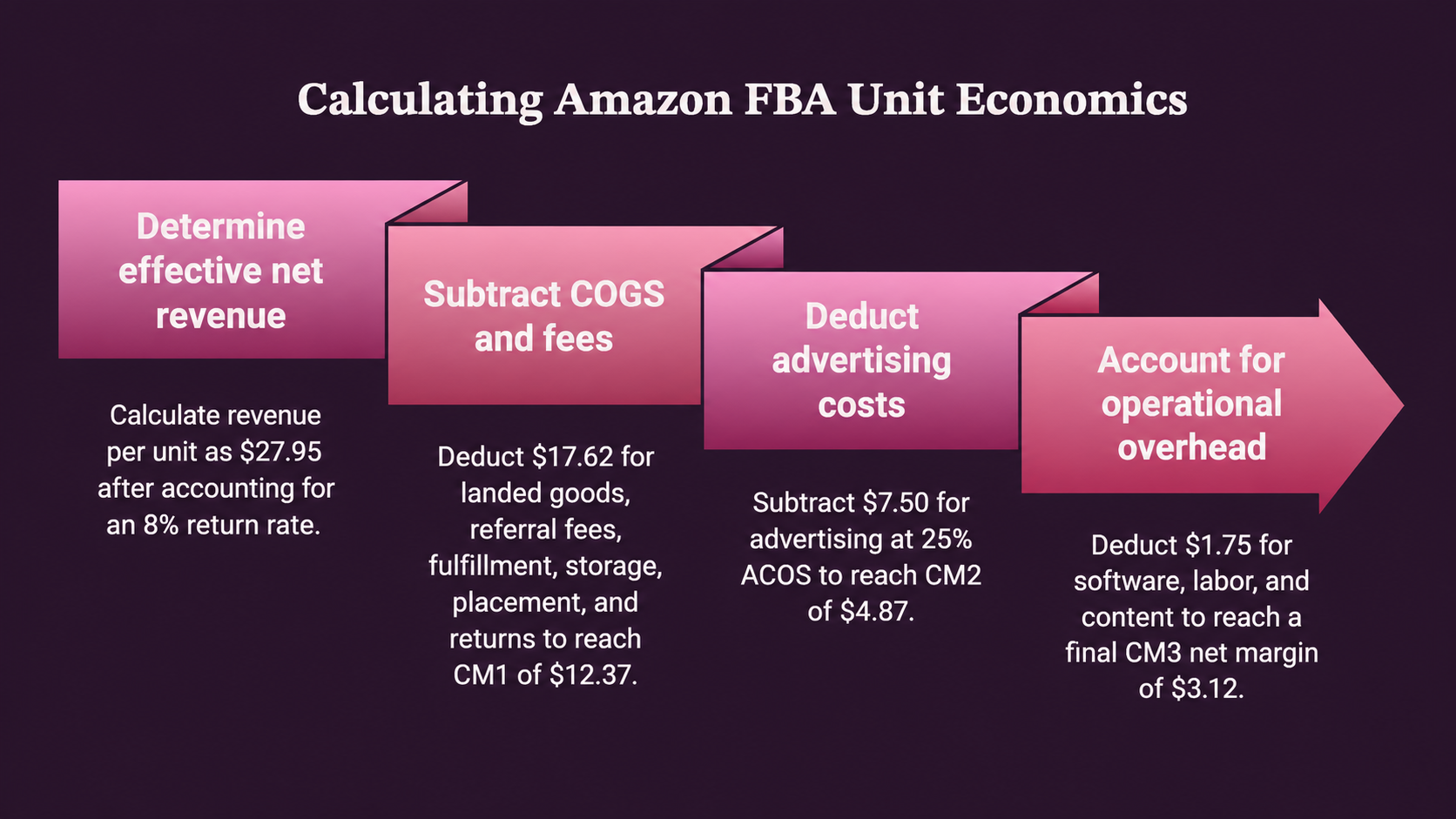
For a seller with a 15% net margin at the $7.50 landed cost, a tariff increase from 30% to 40% reduces net margin by approximately 3 percentage points, from 15% to 12%. If tariffs returned to the peak rates seen in early 2025, most products sourced from China would become unprofitable at current selling prices.
Building tariff resilience
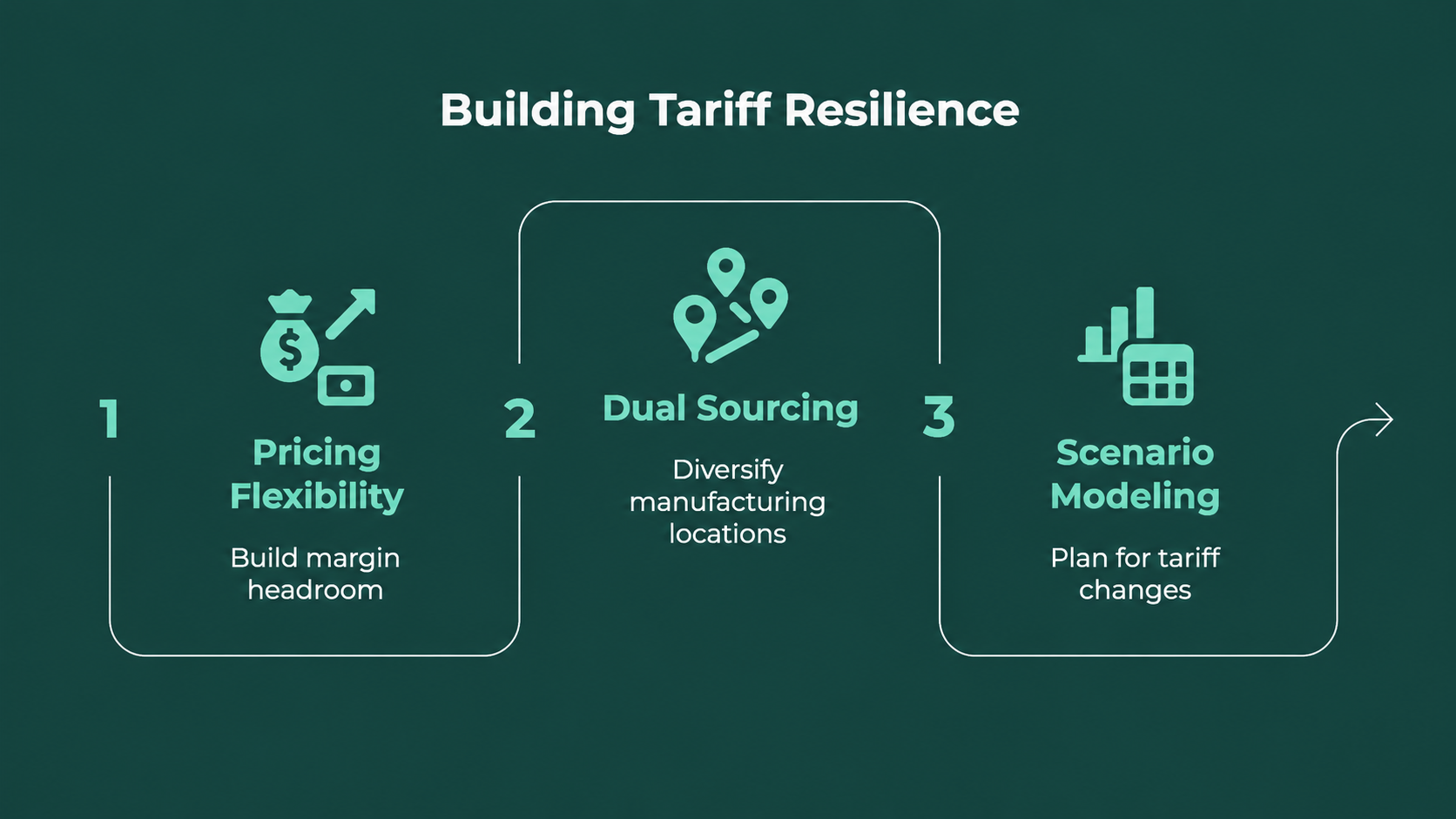
Sellers who thrived through 2025’s tariff volatility shared three characteristics.
First, pricing flexibility. They priced their products with enough margin headroom to absorb moderate tariff increases without needing to raise consumer prices immediately. This meant starting with a higher-margin product selection and maintaining disciplined advertising spend, not racing to the bottom on price.
Second, dual sourcing. They had relationships with manufacturers in multiple countries, not just China. Vietnam, India, Mexico, and Thailand are the most common alternatives. Dual sourcing doesn’t mean splitting production evenly; it means having a qualified backup supplier that can scale within 60-90 days if tariff conditions change.
Third, scenario modeling. They modeled their profitability at multiple tariff levels, current rates, proposed rates, and worst-case rates, and made stocking decisions based on the range rather than a single assumption.
How Realify supports tariff management
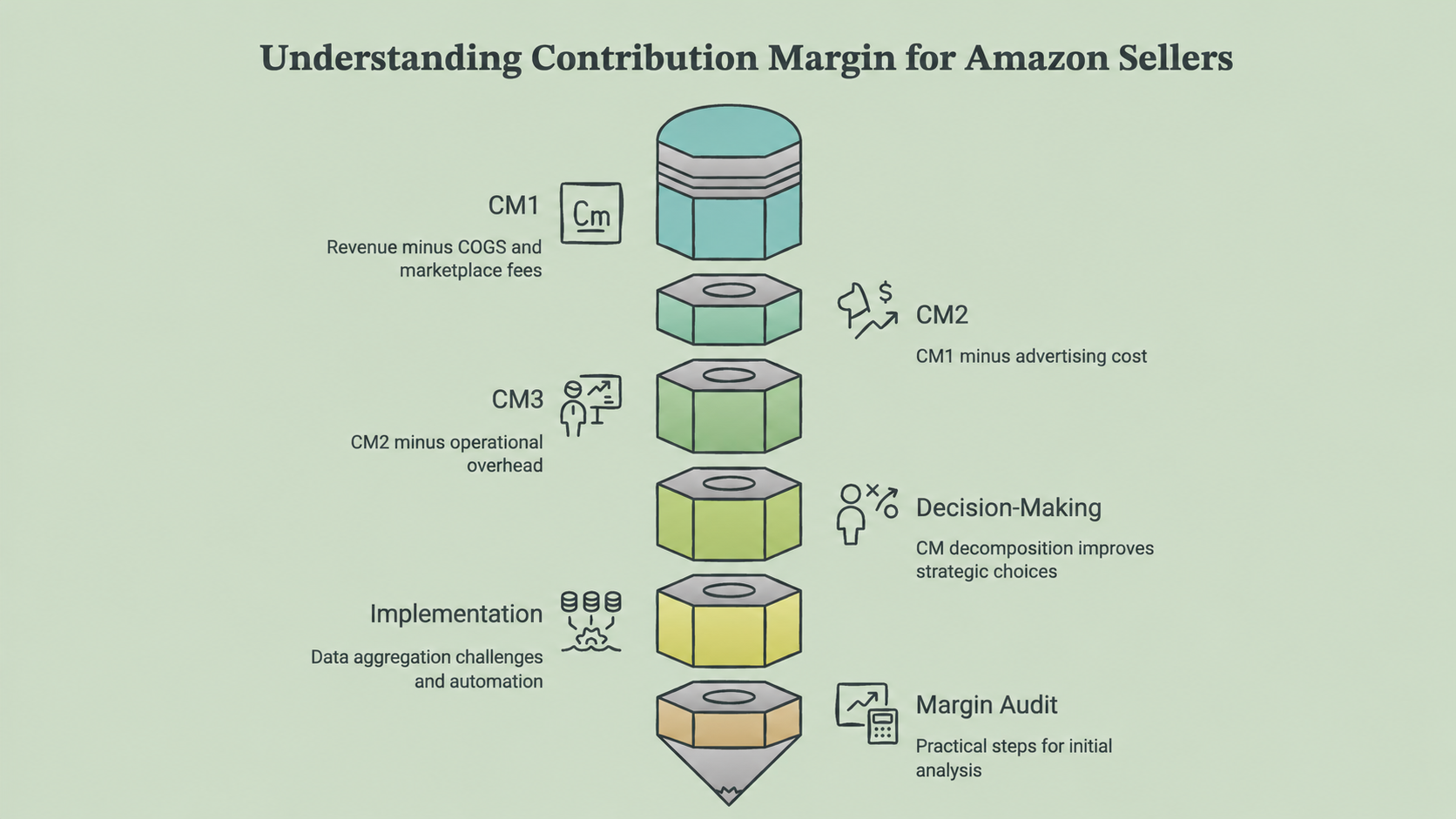
Realify’s margin framework incorporates landed cost at the SKU level, including tariff-affected duty rates. When tariff conditions change, the system recalculates CM1 across your catalog immediately, showing you which ASINs remain profitable and which cross below your margin threshold.
The system can also model scenarios: “If tariffs increase to X%, which ASINs become unprofitable? What price increase would be needed to maintain margin? How would that price increase affect competitive positioning and demand?”
This scenario modeling, which would take hours in a spreadsheet, runs in seconds in Realify, enabling sellers to make tariff-responsive decisions in days rather than weeks.
- •[1] Canopy Management, “Amazon’s Invisible Challenges: A Strategic Analysis for 2026” – tariff volatility reaching 145% peak, current levels 30-40%.