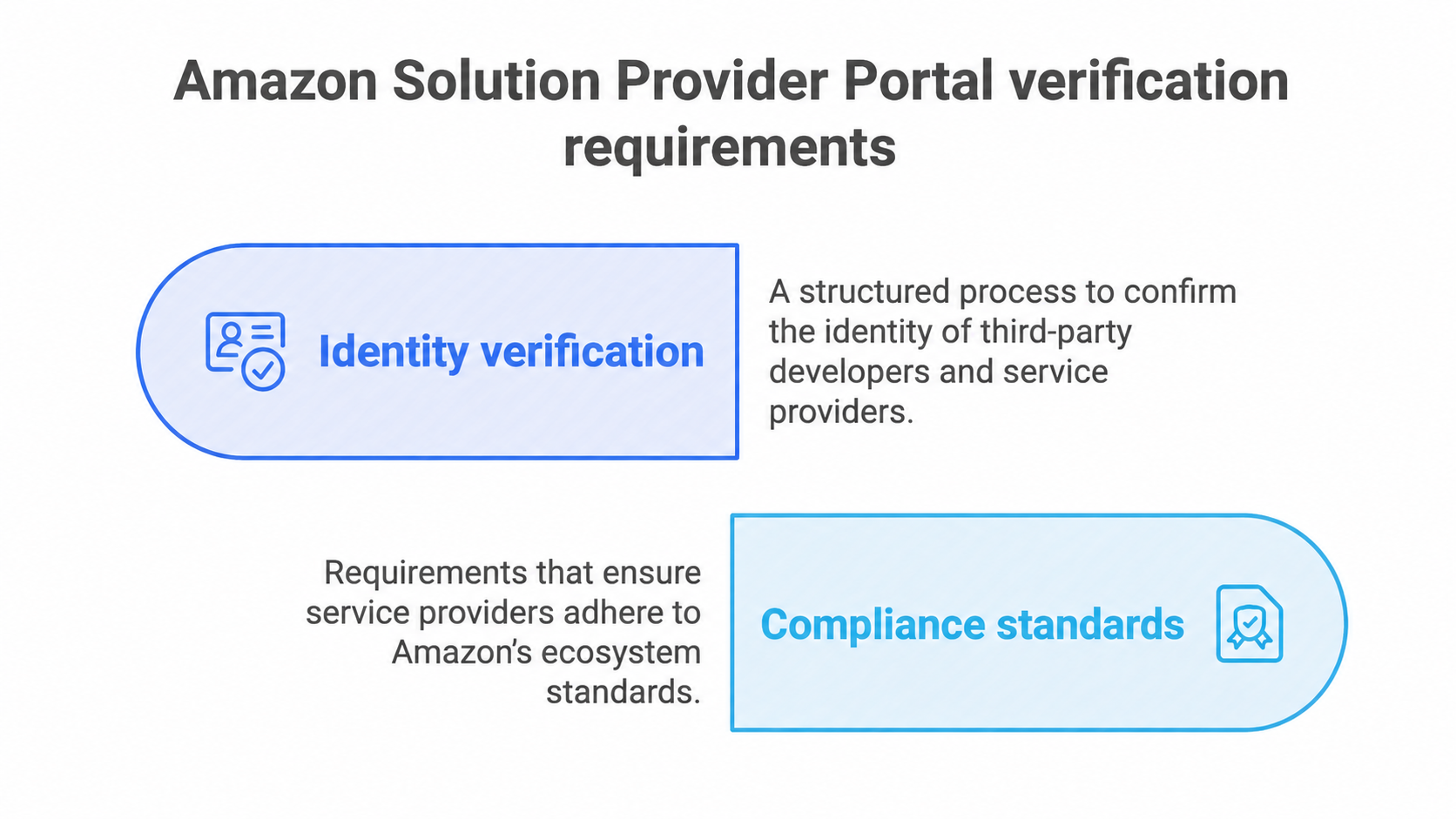
Amazon’s Solution Provider Portal (SPP), introduced in 2025, fundamentally changed how third-party developers and service providers access the Amazon ecosystem. It replaced the previous ad-hoc system of secondary user access with a structured, verified process, and the verification requirements tell sellers a lot about which providers are trustworthy [1].
What Amazon checks
Identity verification: solution providers must complete live video verification and submit business documentation. This confirms that the provider is a real, registered business, not a shell company, individual freelancer, or entity that misrepresents its capabilities.
API compliance: developers must demonstrate that their applications access Amazon data only through authorized APIs. Amazon monitors for unauthorized access methods, excessive API calls, and data usage that violates the Developer Agreement.
Security standards: the SPP includes collaborative monitoring tools (like Guard) that help providers maintain compliance with Amazon’s security standards on an ongoing basis, not just at the time of registration.
Ongoing compliance: registration is not a one-time event. Providers are monitored continuously, and those that fall out of compliance face restrictions or removal [2].
What sellers should look for
When evaluating a technology provider for your Amazon business, the SPP verification creates a baseline, but you should look further.
Is the provider SPP-registered? This is now the minimum bar. Any provider that isn’t registered with the Solution Provider Portal after August 2025 cannot legally access your Seller Central account as a third party.
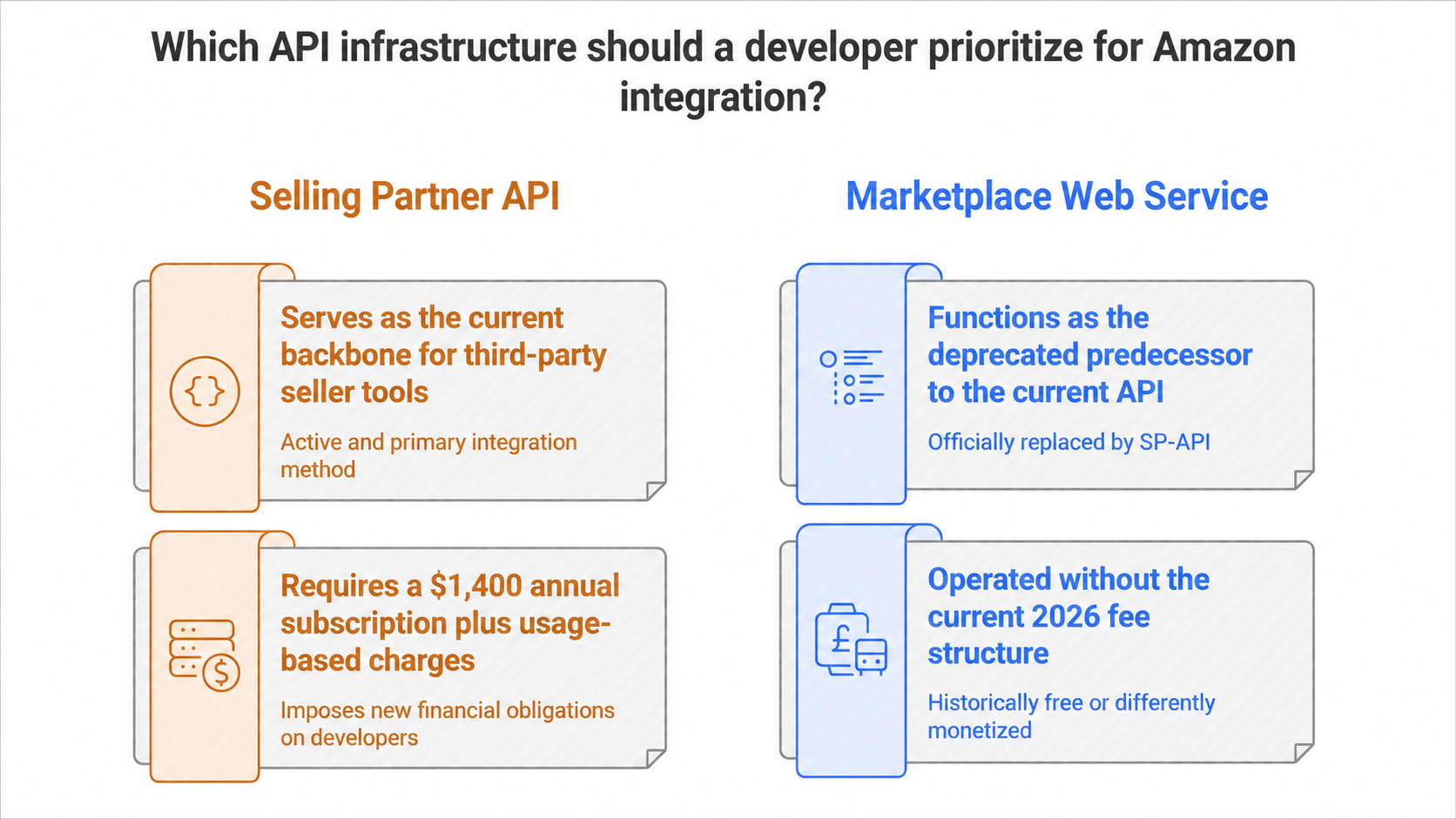
Do they use only official APIs? Ask directly: does your platform connect to Amazon exclusively through SP-API? Some tools supplement SP-API data with scraped data from Amazon’s website, data from browser extensions, or data purchased from third-party aggregators. While the scraped data may be useful, it carries compliance risk.
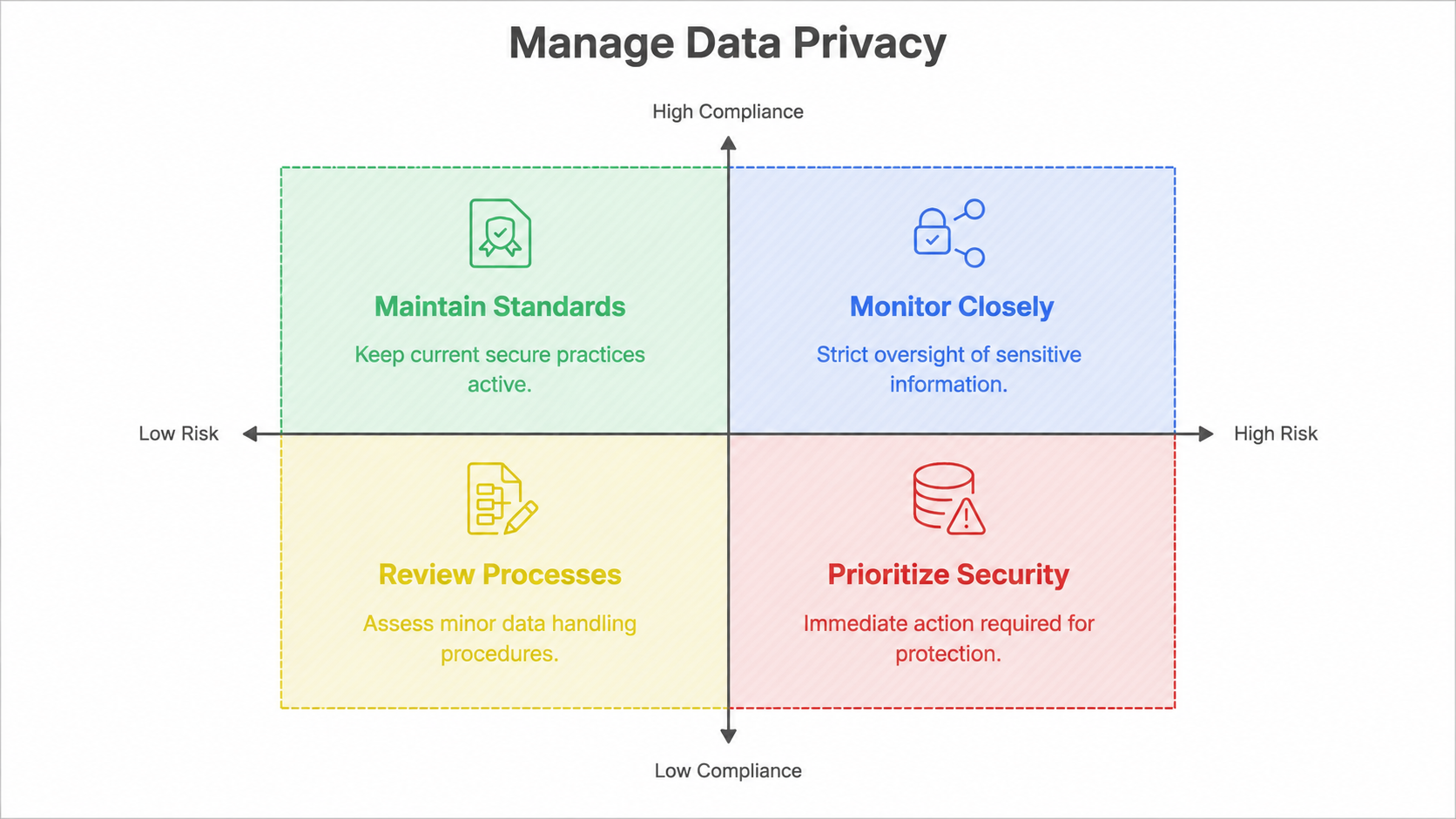
How do they handle your data? Look for clear disclosures about data isolation (is your data kept separate from other sellers?), data retention (what happens to your data if you cancel?), and data sharing (is your data used for any purpose beyond serving your account?).
Do they have a Data Processing Agreement? For sellers handling customer PII through their Amazon operations, a DPA is a compliance requirement under GDPR, CCPA, and DPDPA. Your technology provider should have one available.
Realify’s compliance posture
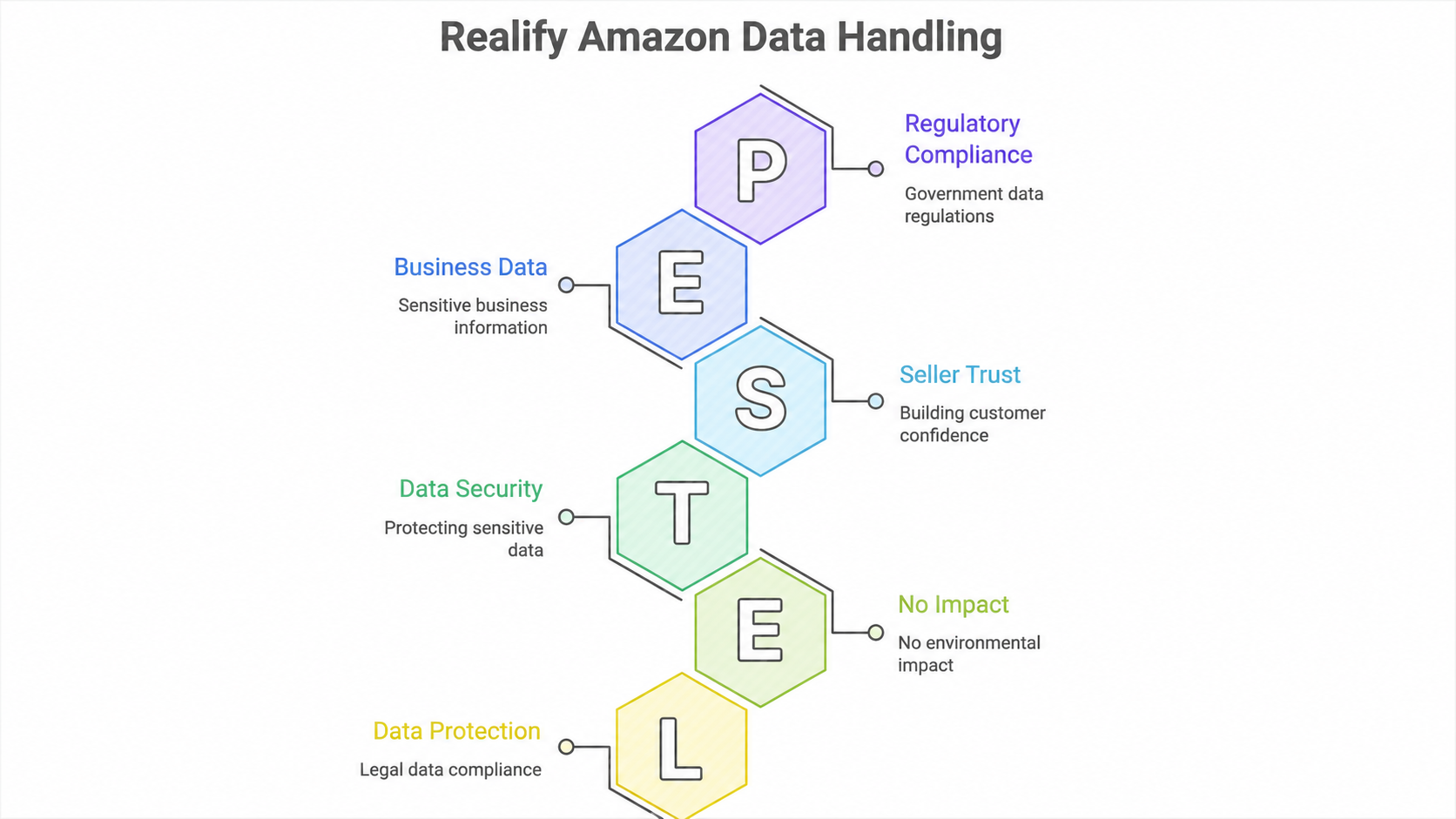
Realify is registered with Amazon’s Solution Provider Portal and connects to Amazon exclusively through official SP-API. We maintain a published Data Processing Agreement available to all customers. Our data handling practices are documented in our Transparency Report (published on our blog and website). We undergo regular security assessments and maintain audit logs of all data access events.
Compliance isn’t a checkbox. It’s a competitive advantage for sellers who choose their technology partners carefully.
- •[1] Amazon Solution Provider Portal documentation, developer.amazonservices.com, 2025-2026.
- •[2] MyAmazonGuy, “Amazon Solution Provider Portal Impacts Service Providers,” July 2025.