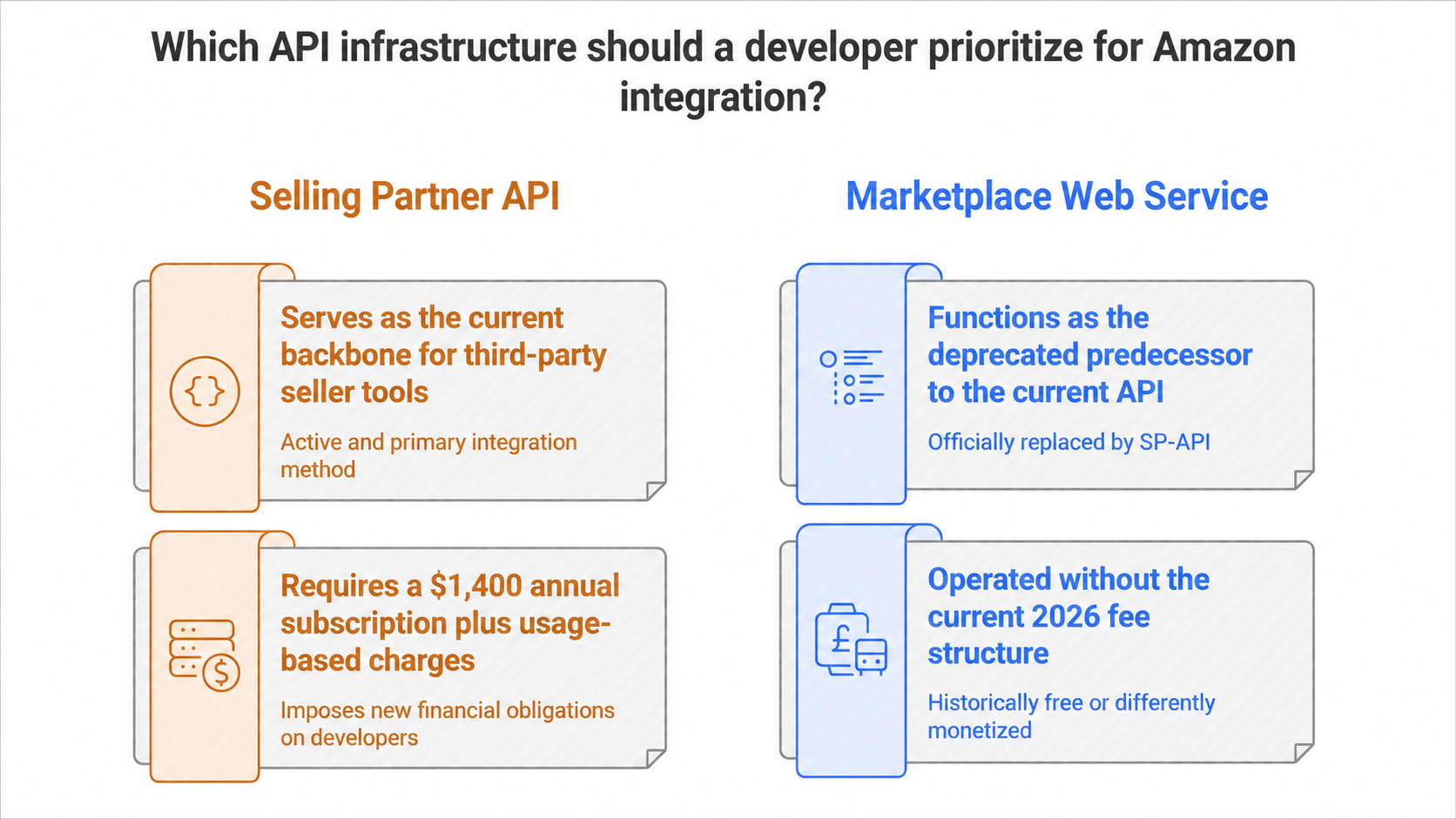
Amazon’s Selling Partner API has been the backbone of the third-party seller tool ecosystem since it replaced MWS (Marketplace Web Service). Every repricing tool, inventory management system, advertising platform, and analytics solution that connects to your Amazon account does so through SP-API.
In 2026, Amazon introduced a fee structure for SP-API access that changes the economics of the entire tool ecosystem. Here’s what changed and what it means [1].
The new fee structure
Starting January 31, 2026, all third-party SP-API developers are charged an annual subscription fee of $1,400 USD. This covers access to the Solution Provider Portal, developer support, and live SP-API use.
Starting April 30, 2026, Amazon adds a monthly fee based on GET API call volume, with four usage tiers: Basic (lowest volume, lowest fee), Pro, Plus, and Enterprise. A free Basic tier exists for low-volume developers, but any tool serving multiple sellers will quickly exceed Basic tier limits.
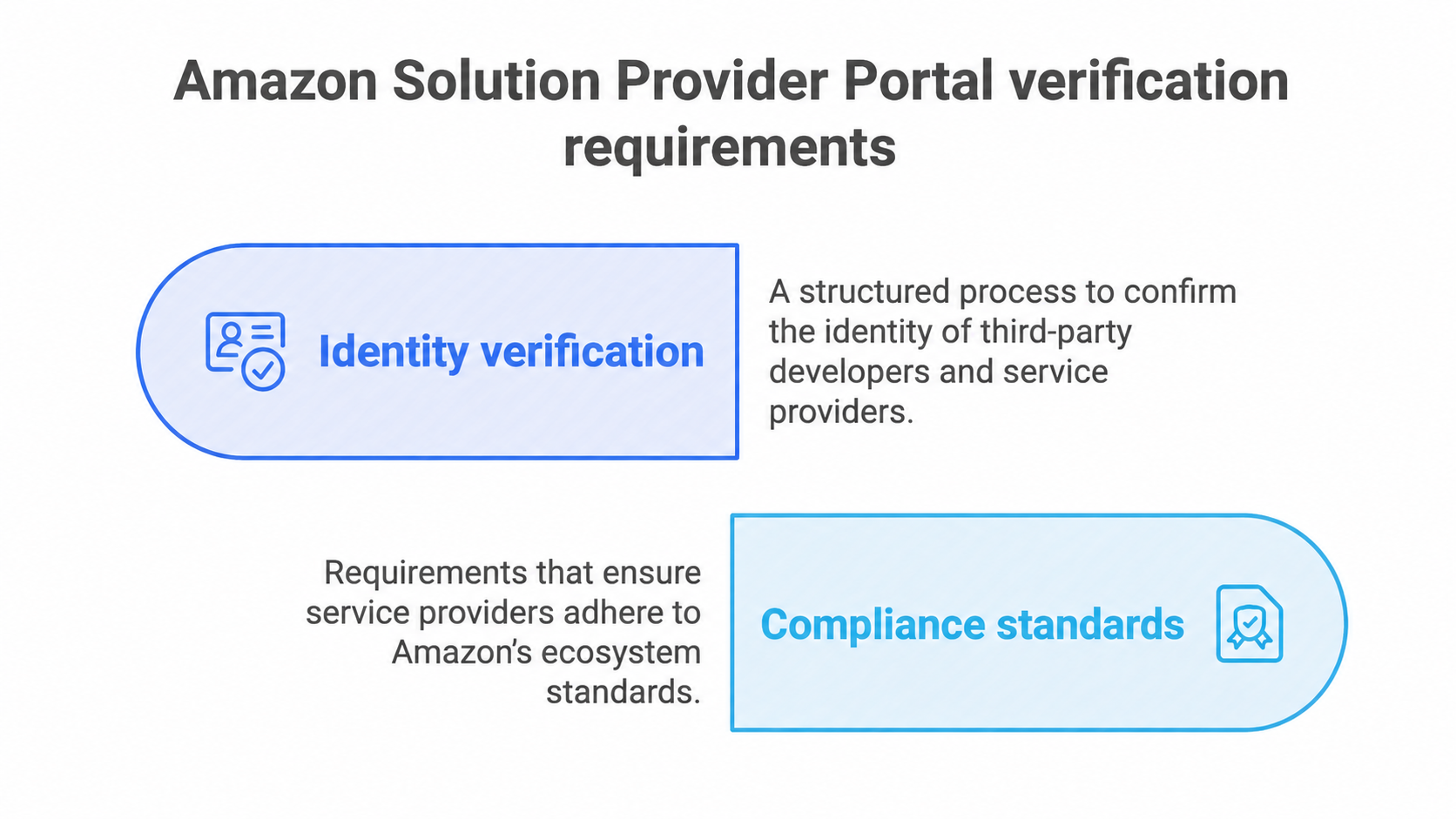
Important distinction: sellers and vendors using SP-API directly for their own business through private developer accounts are exempt from the new fees. The fees apply to third-party developers building tools for other sellers [2].
What this means for sellers
For sellers, the immediate impact is indirect. The tools you use, repricing software, inventory management platforms, advertising automation, will see their operating costs increase. Some tool providers will absorb the cost. Others will pass it through in higher subscription prices. Some may optimize their API call efficiency to minimize the new fees. Others may reduce functionality that requires high API call volumes.
The practical advice for sellers: expect modest price increases from your tool providers over the course of 2026. Evaluate whether your tools are API-efficient (making only necessary calls) or wasteful (polling data at unnecessarily high frequency). Tools that are well-architected will be less affected by usage-based fees than those that rely on brute-force data polling.
What this means for tool choice
The SP-API fee structure creates a subtle but important competitive dynamic among tool providers. Providers with efficient API architectures, those that minimize unnecessary calls while maintaining data freshness, will have a cost advantage that translates to either lower prices or higher margins. Providers with wasteful architectures will face pressure to either optimize (which takes engineering investment and time) or raise prices.
For sellers evaluating tools in 2026, API efficiency becomes a relevant criterion. Ask your tool provider: how many API calls does your tool make per connected seller account? How will the new SP-API fees affect your pricing? Have you optimized your call patterns in response to the fee structure?
Realify’s position on SP-API fees
Realify’s platform is architected for API efficiency from the ground up. Rather than polling every data endpoint at maximum frequency, the system uses event-driven architecture where possible and intelligent scheduling where polling is required, calling endpoints at the frequency each data type actually needs, not the maximum Amazon allows.
This means the SP-API fee impact on Realify’s operating costs is minimal compared to tools built on less efficient architectures. We do not pass SP-API fees through to customers as a line item. Our subscription pricing covers all API access as part of the platform.
- •[1] Amazon SP-API fee announcement, developer.amazonservices.com, effective January 31, 2026.
- •[2] eMagicOne, “Important Amazon SP-API Update, Action Required Before January 31, 2026,” December 2025.