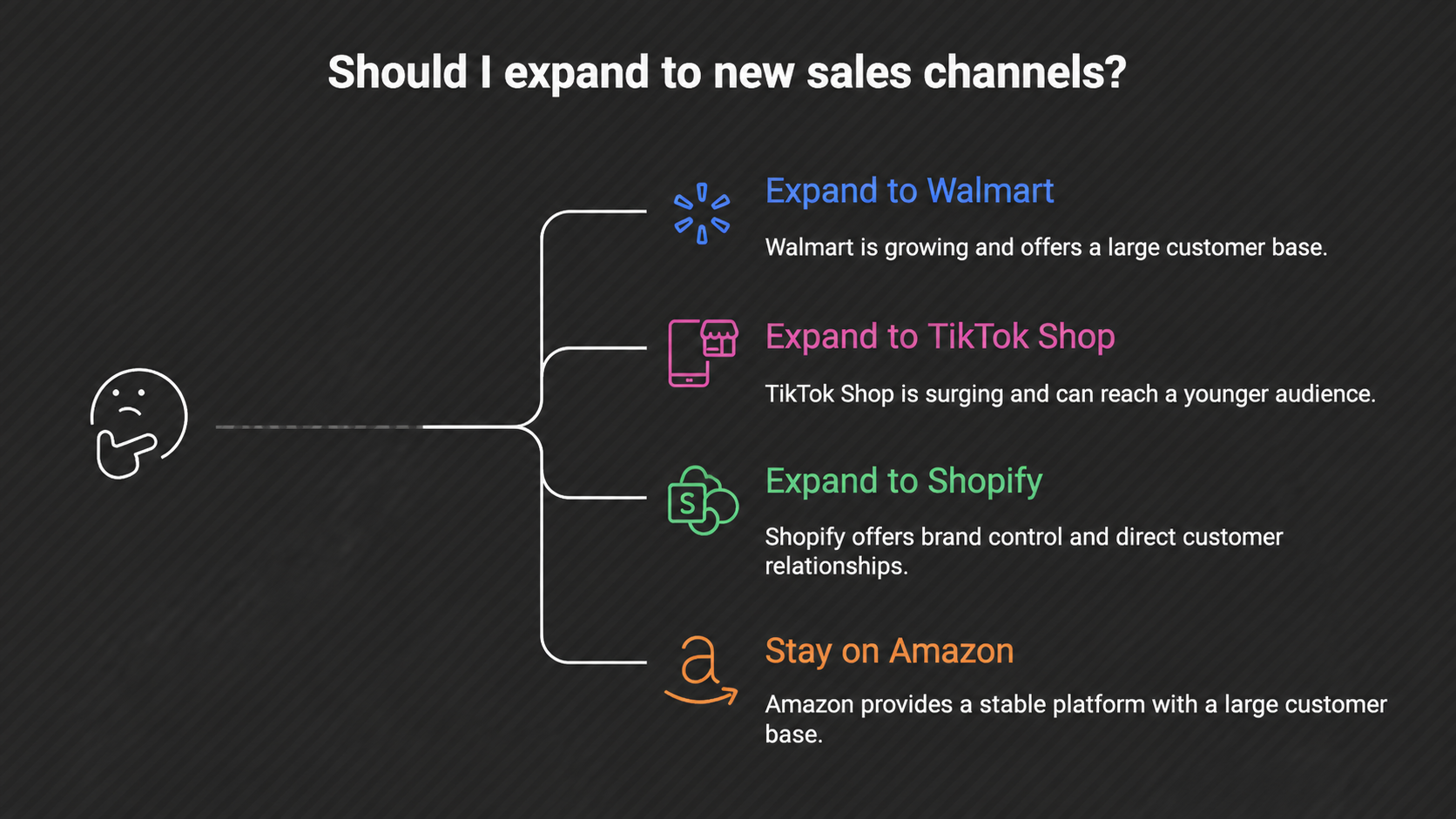
The temptation to expand to every available marketplace is strong. Walmart is growing. TikTok Shop is surging. Shopify offers brand control. Each represents revenue that Amazon alone can’t capture.
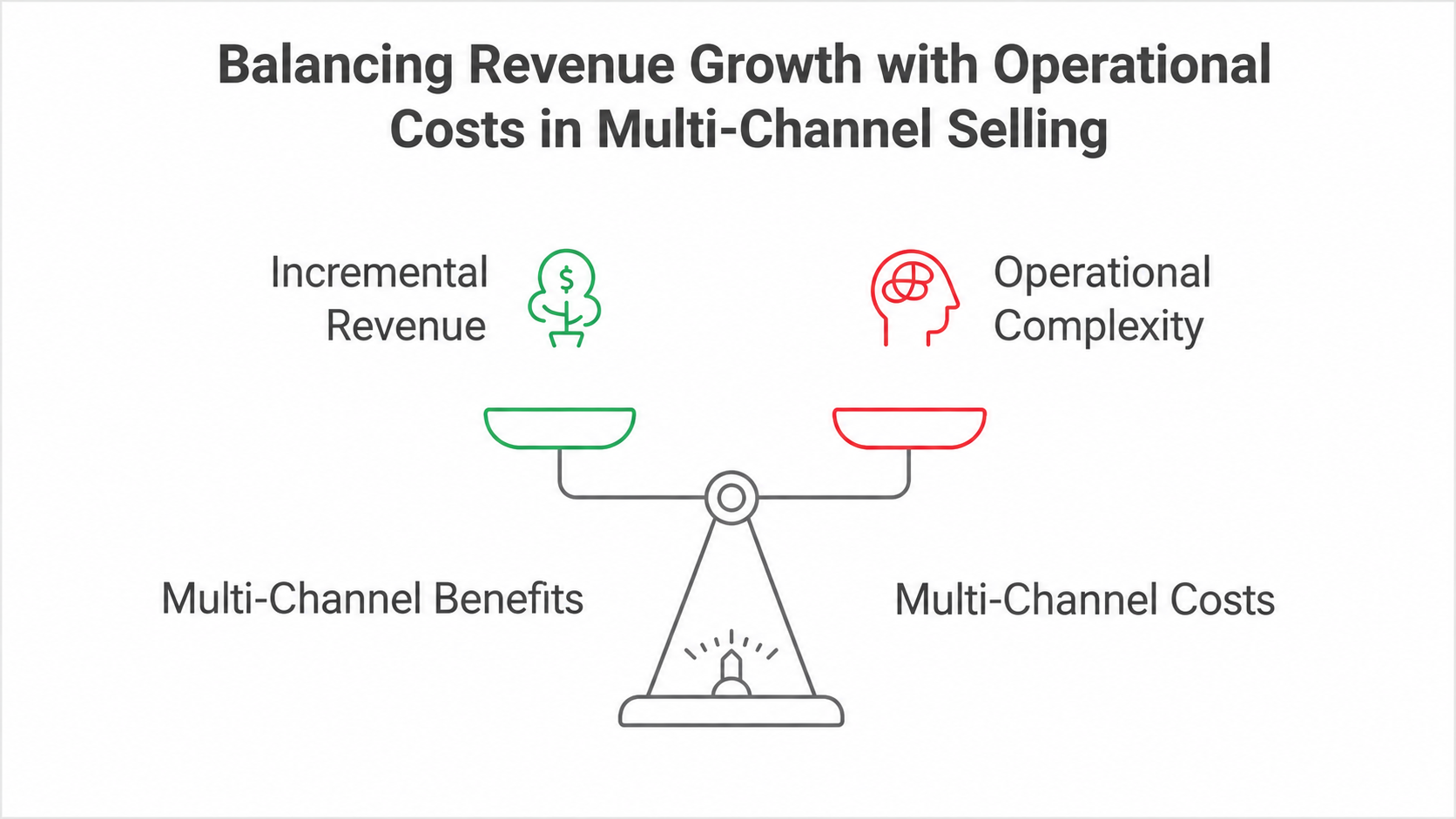
But channel expansion executed prematurely is one of the most common causes of operational degradation among Amazon sellers doing $500K to $5M annually. The channel that was supposed to grow the business instead distracts the team, fragments inventory, and dilutes the focus that made the Amazon business successful in the first place.
Here’s a framework for evaluating channel expansion that prioritizes readiness over opportunity.
The readiness assessment
Before evaluating which channel to add, evaluate whether your current operation can absorb the expansion. Five questions determine readiness.
Is your Amazon business operationally stable? If you’re still fighting fires on Amazon, pricing errors, inventory stockouts, advertising inefficiency, account health issues, adding a channel adds complexity to an already stressed operation. Stabilize first.
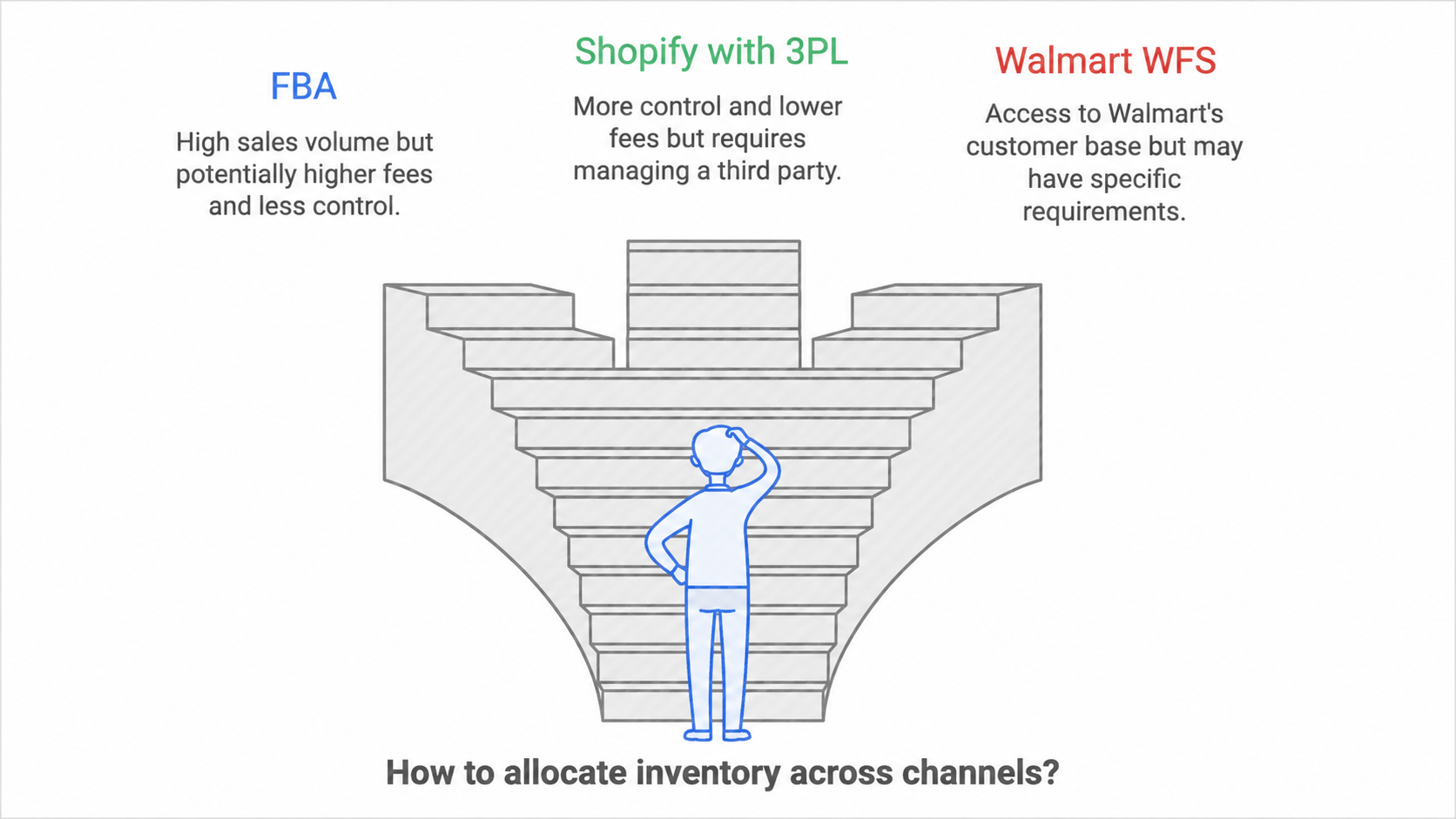
Do you have excess inventory capacity? Channel expansion requires inventory allocation across multiple pools. If your current FBA inventory is tightly calibrated to Amazon demand, you’ll need additional stock, which means additional working capital and supplier capacity.
Can your team handle another dashboard? Every channel has its own operational interface, each with its own terminology, workflows, and alert systems. Each requires dedicated learning, monitoring, and response capacity. If your team is already at capacity managing Amazon, a new channel will reduce the quality of Amazon operations.
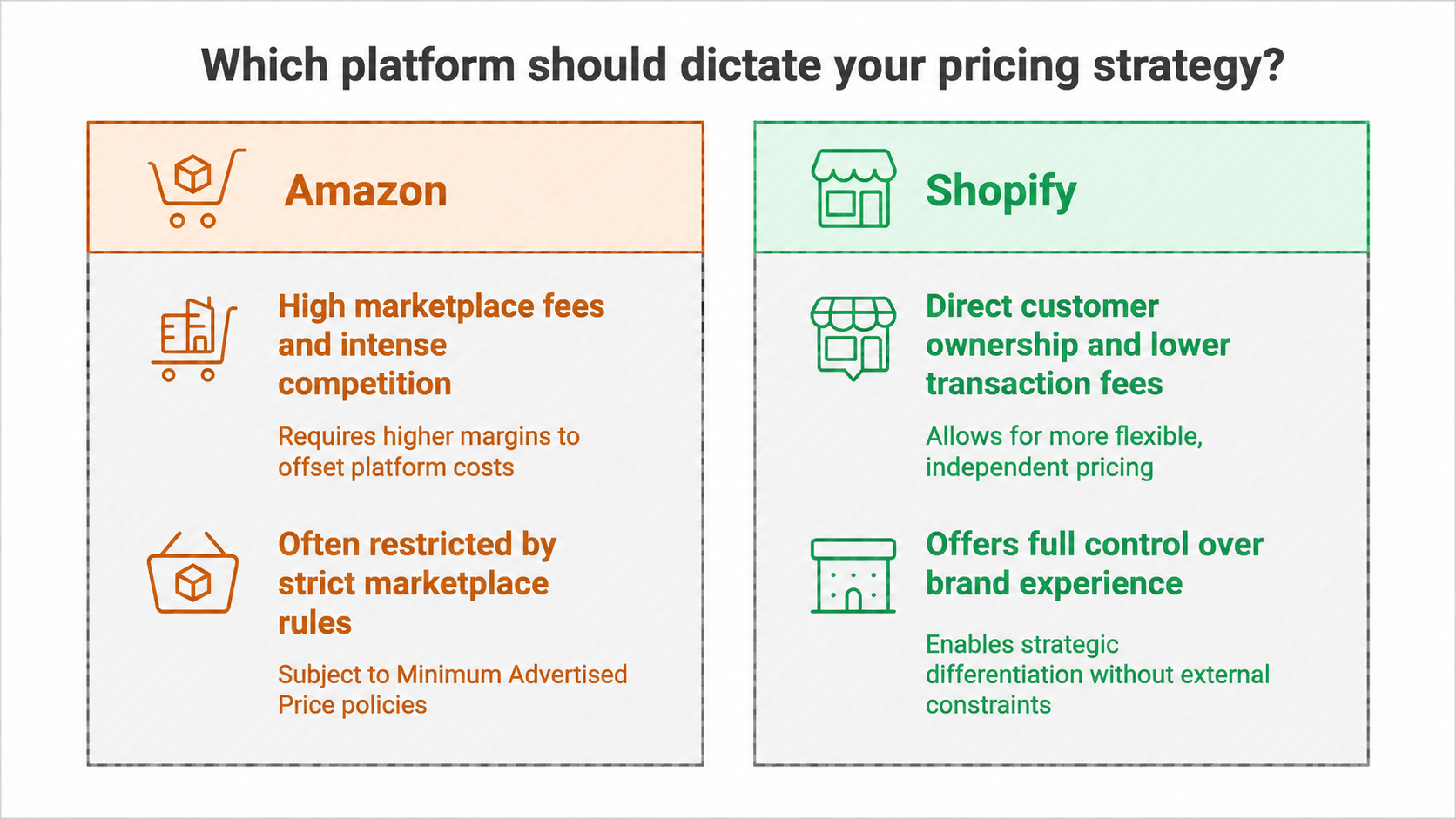
Is your product catalog suitable for the new channel? Not every product performs equally across channels. Products that sell well on Amazon (where shoppers have high purchase intent) may not convert on TikTok Shop (where discovery is content-driven). Products with MAP policies may face different competitive dynamics on Walmart than on Amazon.
Do you have fulfillment infrastructure for the new channel? Amazon FBA doesn’t fulfill Walmart orders (though Amazon MCF can fulfill Shopify and other channels). Walmart WFS is available but still expanding. Shopify requires either self-fulfillment, a 3PL, or Amazon MCF. Each option has different cost structures and service level implications [1].
Channel-by-channel evaluation
For Amazon sellers evaluating expansion, here’s a concise assessment of each major channel.
Walmart Marketplace is the strongest expansion candidate for most Amazon sellers. The catalog overlap is high (most Amazon-suitable products work on Walmart), the advertising infrastructure is maturing, and competition is significantly lower than Amazon for most categories.
The primary consideration is fulfillment infrastructure, which continues to expand in coverage and capacity across the channel. Sellers using FBM or 3PL fulfillment have an easier transition.
Shopify (D2C) makes sense for sellers with brand recognition who want to capture direct traffic and build a customer relationship outside marketplace platforms.
The fee-based cost structure differs from marketplace models, which can improve margin profile, but the traffic acquisition cost is higher because you’re responsible for driving all traffic through paid advertising, SEO, email, and social.
TikTok Shop is the most dynamic opportunity and the highest risk. The platform is growing rapidly, and sellers with video-friendly products report strong results. But the operational model is fundamentally different. Success on TikTok Shop is content-driven, requiring video creation, influencer partnerships, and a community engagement strategy that Amazon sellers typically don’t have in-house [2].
Established auction and secondary marketplaces remain relevant for sellers with refurbished, excess, or long-tail inventory, offering a competitive fee structure and a loyal buyer base for certain product types.
The Realify approach to channel expansion
When you connect a new channel to Realify, the system doesn’t just add another data feed. It integrates the new channel into your existing operational framework. Inventory allocation rebalances across all connected channels. Pricing intelligence accounts for the new channel’s fee structure and competitive landscape. Advertising performance includes the new channel in your portfolio-level view.
This integration is what makes channel expansion manageable at scale. Without it, each new channel is a standalone operation competing for the same team’s attention. With it, each new channel is an incremental surface within a unified system.
- •[1] Fulfillment options comparison based on Amazon MCF, Walmart WFS, and major 3PL published pricing, 2025-2026.
- •[2] TikTok Shop seller dynamics and content requirements documented in Helium 10’s TikTok Shop expansion features, 2025-2026.